






Package Details
Sleep test package
Starts at 26,000 Baht at Praram 9A sleep test package is a diagnostic service for evaluating sleep disorders like sleep apnea, insomnia, and narcolepsy. You can typically choose between a supervised, in-lab study (polysomnography) or a more convenient, at-home test (Home Sleep Apnea Test).
Details
An HSAT is a simplified, at-home study primarily used to diagnose moderate to severe obstructive sleep apnea (OSA) in otherwise healthy adults.
Package inclusions
The package typically includes a portable monitoring device and sensors, which can vary depending on the provider and technology used. Common components include:
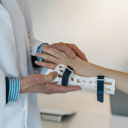
A wearable device, often worn on the wrist.
- Sensors for the chest, finger, and wrist.
- A nasal cannula to measure airflow.
- A pulse oximeter clip for the finger to track blood oxygen levels.
- A smartphone app to collect and transmit data to a physician.
- A consultation with a sleep specialist to review your results.
In-lab polysomnography (PSG)
A polysomnography test is considered the "gold standard" for diagnosing a wide range of complex sleep disorders. You spend a night in a sleep center or hospital where trained technologists monitor your sleep.
Package Items
| No | Sleep test package | |
| 1 | Electrodes on your scalp, face, and chest to monitor | Brain waves (EEG) |
| 2 | Electrodes on your scalp, face, and chest to monitor | Eye movements (EOG) |
| 3 | Electrodes on your scalp, face, and chest to monitor | Heart rate and rhythm (ECG) |
| 4 | Belts around your chest and abdomen to measure | Breathing effort |
| 5 | A sensor near your nose to measure | Airflow |
| 6 | Electrodes on your scalp, face, and chest to monitor | Brain waves (EEG) |
| 7 | Electrodes on your scalp, face, and chest to monitor | Eye movements (EOG) |
| 8 | Electrodes on your scalp, face, and chest to monitor | Heart rate and rhythm (ECG) |
| 9 | Belts around your chest and abdomen to measure | Breathing effort |
| 10 | A sensor near your nose to measure | Airflow |
Terms and Conditions
- More comfortable in your own bed, which can lead to more natural sleep data.
- Less expensive and often more accessible than in-lab studies.
- Less comprehensive than an in-lab study; it cannot diagnose complex sleep disorders and may miss milder cases of sleep apnea.